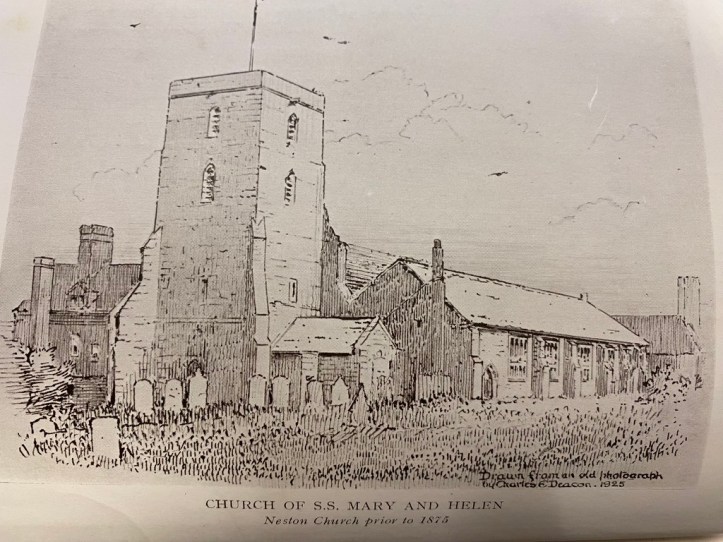
When workmen renovating the Parish Church of Saint Mary and Saint Helen in Neston in 1874 unearthed four carved sandstone fragments that appeared to be of great age, Henry Ecroyd Smith was the first antiquarian on the scene and presented his findings in a lecture on 18 March 1875, entitled ARCHÆOLGY IN THE MERSEY DISTRICT, AND LIVERPOOL NOTIBILIA IN 1874.
In a section entitled Anglo Saxon and Mediæval Sculptures at Neston, while discussing what is now referred to as ‘Stone 2’ he notes that unlike similar carvings from the Isle of Man, there are no runes carved into any sculptures found to date on the Wirral:
…except, perhaps, the carved stone found many years ago by the old sexton – Coventry by name, and lately deceased – who, as we have repeatedly heard from his lips “wheeled it into the rector’s garden” shortly after discovery. He disclaimed any further knowledge of this noticeable stone, which he described as possessing “great scrawming letters which nobuddy could read;” but as he invariably “made himself scarce,” after the subject was mooted, the enquirer never failed to consider that something remained untold.
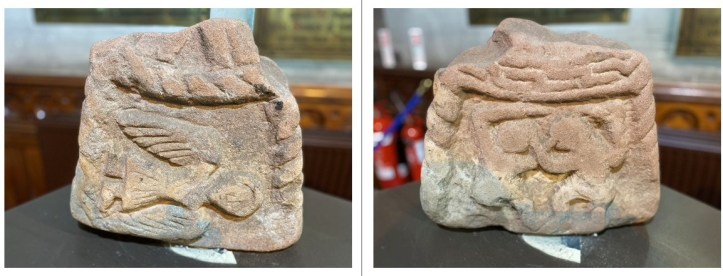
This section of Smith’s text has been taken to mean that one of the Neston stones has been lost. The Corpus of Anglo-Saxon Stone Sculpture for example discusses ‘Neston 6’ as an inscribed stone:
Appendix C item (lost stones for which no illustration has survived)
Smith (H. E. 1875, 91) recorded that a stone was found by the sexton ‘many years ago’ with ‘great scrawning letters which nobbudy [sic] could read’. This was taken to the rector’s garden; it is no longer forthcoming. There is no reason to believe that it dated to the Anglo-Saxon period, and may have been an inscribed post-Conquest grave-cover similar to that found in the 1874 restoration of the church (Bidlake 1936).
A few points should be clarified here. Firstly, Smith is no longer talking about Neston but is referring to the church of St Hilary in Wallasey. The ‘old sexton’ is John Coventry and the rector in question is Thomas Byrth (1793 – 1849). ‘Scrawming’ is a dialect word for ‘scratched’ and since ‘nobuddy could read them’, Smith is suggesting that they were runes. It would appear, that while digging a grave, Coventry unearthed a carved stone with a runic inscription. He put the stone in his wheelbarrow and took to Byrth’s garden. This stone subsequently disappeared, and Smith seems convinced that Coventry knew more about the affair than he was letting on.
Smith continues:
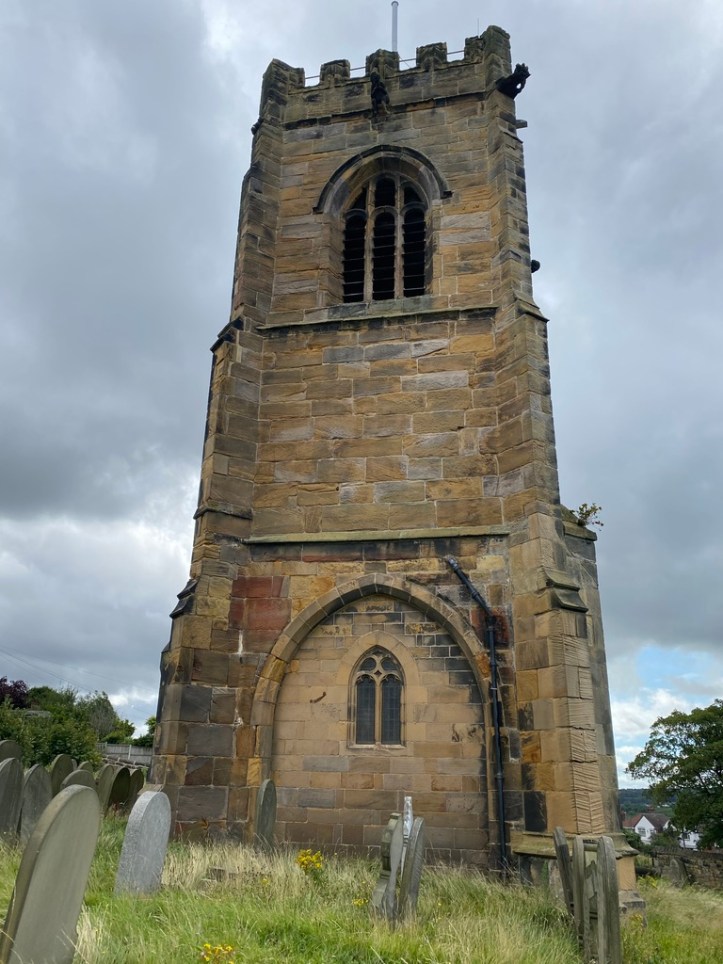
When making what enquiries lay in our power in this connection, information reached us of an ancient sepulchral stone, which the late Mrs. Byrth (widow of the Rector who had the Runic one wheeled into his garden,) had carried off to New Brighton and kept in her cellar. This lady, who had certainly appropriated a certain tombstone in a most “irregular” manner, had lately, as we learnt, offered it to the then Rector, Mr. Haggitt, and on his refusing to have anything to do with the business, she sent the stone to the churchyard, not, however, before it had been broken and spoilt by some careless workmen while still in the cellar, and now it lies near the old church tower in a sadly dilapidated condition. This monument is about the middle of the sixteenth century; its decoration is of a highly floral and ornate character, and an inscription in Gothic capitals, and ending in “ABSOLUTIO,” is not carried down the shaft of a central cross in high relief, but into the left side of the calvary.
Smith seems to be implying that the Rev. and Mrs. Byrth (with the knowledge of, if not actively assisted by, John Coventry) were involved in some questionable activities concerning at least two ancient monuments, one of which was stored latterly at Mrs. Byrth’s house in New Brighton. Furthermore, Rev. Byrth’s successor as Rector of Wallasey, Frederick Haggitt (1820-1867) suspected something amiss and refused to be involved in Mrs. Byrth’s plans.
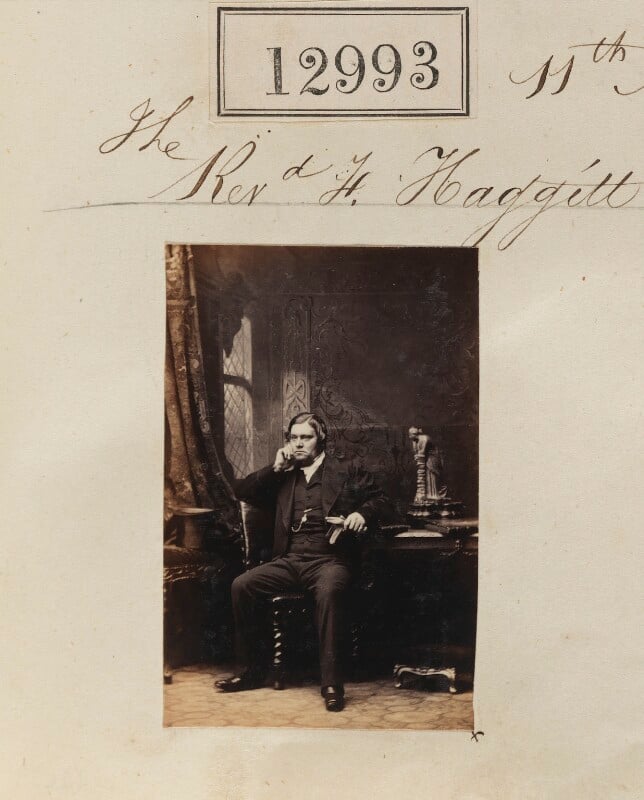
https://www.npg.org.uk/collections/search/portrait/mw244505/Frederick-Haggitt
It would improve my narrative if this mid-sixteenth century cross could still be seen near the tower but despite a long search of that part of the churchyard, I have been unable to locate it. In my defence, the area was very overgrown at the time of my visit and a stone that dilapidated in Smith’s day is in all likelihood completely unrecognisable a century and a half later.As for the whereabouts of the stone with the runic inscription, who knows? But if I lived in New Brighton, I think I would have a good look in my cellar.
* * *
There was a tradition in my family that my great grandfather, Reuben Oliphant was born in Wallasey the night that St Hilary’s church burnt down.
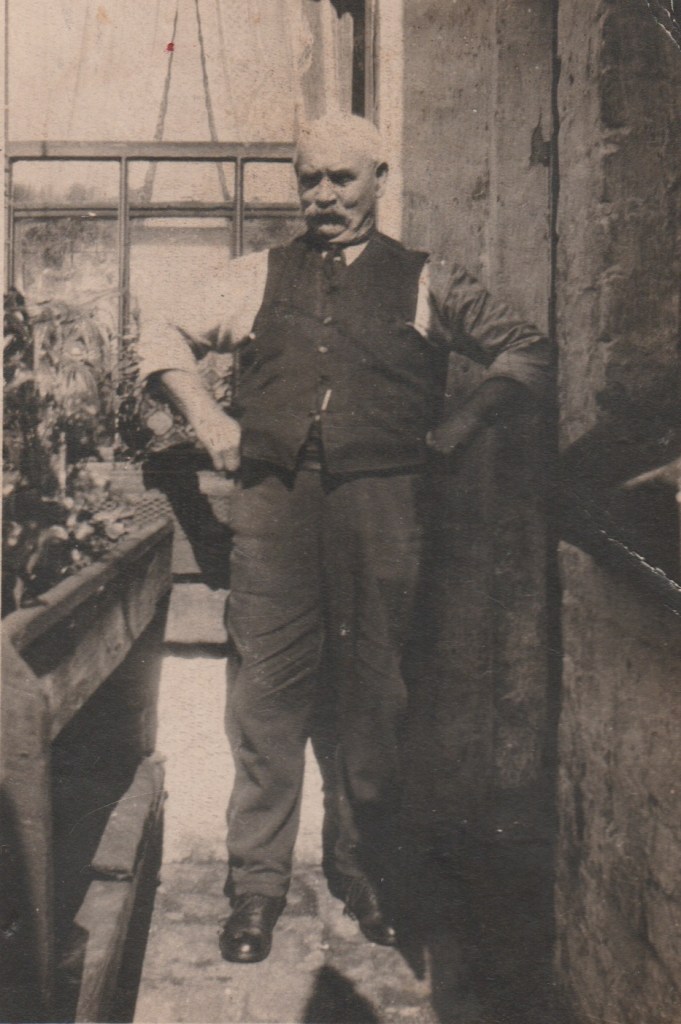
With apologies to my relatives, he wasn’t. He was, however born on 13 July in the same year as the fire – 1857. The church burned in the early hours of Sunday 1 February. The story goes that the parishioners had complained about the church being cold during services on the previous Sunday, so the sexton had over-stoked the boiler, which caused several hams that were unofficially curing in the rafters, to melt and drip fat, which caught fire. Apparently, Wallasey Village smelt of bacon for days afterwards – as well as appearing in several printed and online articles, this story is told on a sign on the old tower at St Hilary.

The sexton who stoked the boiler was our very own John Coventry. It was said that the rector entered the burning building at great personal risk and rescued the parish registers. That rector was the Frederick Haggitt, who refused to get involved in the matter of the gravestone in the New Brighton cellar. There are other reports that it was in fact Coventry who retrieved the registers but if it was, it made little difference to his career as he was ultimately held responsible for the blaze and was dismissed as the sexton of St Hilary’s.
John Brunsdon
Sources
Henry Ecroyd Smith, ‘Archæology in the Mersey District and Liverpool Notabilia in 1874’, Transactions of the Historic Society of Lancashire and Cheshire; 27 (1874-1875), pp. 85-108, <https://www.hslc.org.uk/wp-content/uploads/2017/07/27-7-Smith.pdf> [accessed 23 July 2026].
The Corpus of Anglo-Saxon Stone Sculpture Volume 9: Cheshire and Lancashire (Durham University 2022), <https://www.chacklepie.com/ascorpus/catvol9.php?pageNum_urls=170&totalRows_urls=247> [accessed 23 July 2026].
Bidlake, Walter (1936) Neston Church and Parish. A brief historical survey.
Liverpool Daily Post, Monday 2nd February 1857, <https://www.newspapers.com/image/797510002/?clipping_id=new> [accessed 23 July 2026]
Anon, St. Hilary’s Parish/Wallasey/Old Wirral.net, <https://oldwirral.net/wallasey_sthilarys.html> [accessed 23 July 2026].

