The early-Victorian period was an important phase in the development of gambling as a daily leisure activity in Britain. With a rising urban population, gambling was now practised on a larger scale than ever before. This period also saw significant attempts to restrict urban gambling, thanks to the moralising influence of an increasingly powerful middle class. Liverpool’s prominence and economic volatility as a major port city makes it a particularly fascinating case study for urban gambling in early-Victorian Britain.
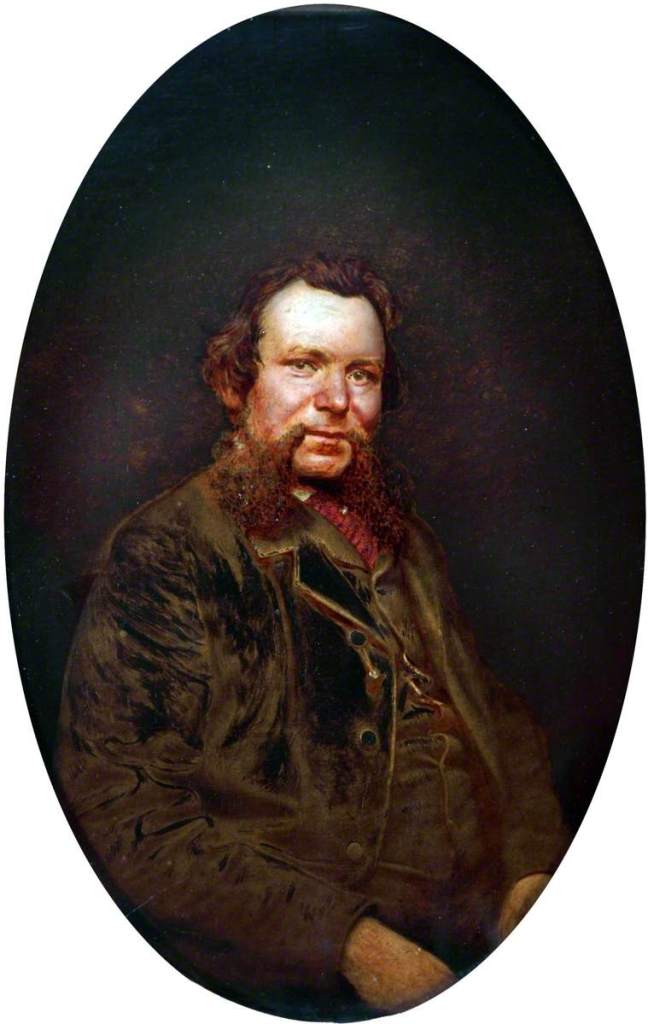
Detailed statistics for gambling in Victorian Liverpool are elusive. Although some statistical records can be found in the Liverpool Record Office and UK Parliamentary Papers archives, they are inconsistently available and many gambling offences were recorded under broader criminal categories. However, a rich body of material for urban gambling can be drawn from less ‘concrete’ sources, provided their biases are kept in mind. Victorian Liverpool maintained an extensive newspaper press, including prominent publications like the Liverpool Daily Post, Liverpool Albion, Liverpool Mail and Liverpool Mercury. Unlike criminal statistics, contemporary newspaper reports can often tell us who gambled, how and where. Meanwhile, published social investigations, like the Liverpool Life series by notable local journalist Hugh Shimmin, provided valuable insight as to why people gambled. Their detailed, on-the-ground reporting illuminated the impact of social conditions on leisure in urban Liverpool.
Urban gambling in Victorian Liverpool was generally practised in three contexts – the street, public houses and betting houses – serving distinct socio-economic functions for different demographic groups.
Working-class youths favoured street gambling – simple games, played within groups or via itinerant stalls. Street gambling was casually organised, in informal gatherings small and large. For example, Shimmin reported that a makeshift gambling fairground near Lime Street became a popular haunt in the 1850s. Dock labourers and sailors, meanwhile, gambled mostly in Liverpool’s pubs – often sweepstakes on horse races or card games. Around 1,400 pubs formed the central leisure institution of early-Victorian Liverpool, and leisure opportunities like gambling enhanced their role as an escape from tough domestic and working conditions.
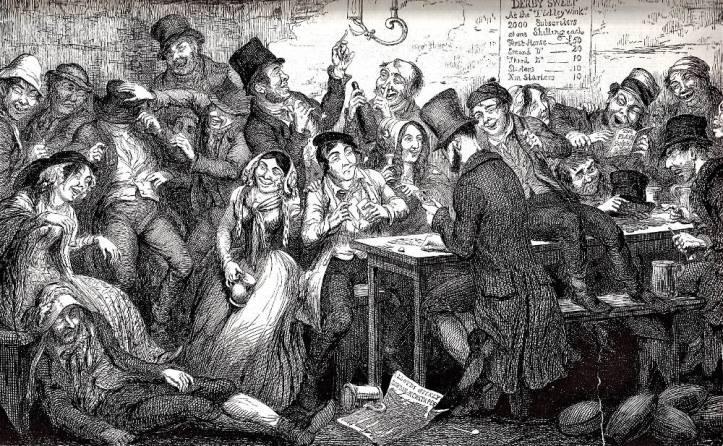
Plate 2, “The Drunkard’s Children. In Eight Plates” — George Cruikshank’s second cautionary Hogarthian progress (1848)
By contrast, betting houses were specifically dedicated to gambling, mostly on horse races. They were run by professional bookmakers who could consistently lay odds on events nationwide. This level of organisation made them popular among the town’s middle class. Betting was perhaps more appealing for those with higher incomes, permitting larger wagers than other contexts, and their consistent availability suited those with more regular work/life schedules.
Many Victorian social commentators viewed urban gambling, particularly by the working classes, as a threat to public order and a source of social, moral and religious degeneration. But their responses were without nuance. Some also criticised growing middle-class involvement in urban gambling. Others were surprisingly progressive, rejecting then-popular character-based explanations of gambling and highlighting the role of Liverpool’s unique socio-economic conditions in encouraging it. They prescribed improving social conditions in the city as the most effective way to curb ‘disorder’ and ‘low pleasures’.
Furthermore, significant vitriol was directed by middle-class Liverpudlians towards upper-class gamblers. It was feared that they would encourage social degeneration from the top down, particularly the many parliamentarians who frequented private gambling clubs in London.
Though responses to early-Victorian gambling were diverse, the pursuit remained criminalised. Gambling was outlawed as early as 1541, and public gaming and betting were specifically legislated against in 1845 and 1853. Minor offences were also illegal under local public order statutes.
Recorded prosecutions, however, were minimal. Much gambling went unreported, as it had willing participants. Urban gambling, moreover, was often conducted in large gatherings or enclosed spaces, which could be hard to police – as demonstrated by one 1852 incident in which policemen were injured trying to control a gambling fair-turned-riot near Freemasons Row. Legal ambiguities also hampered prosecution, including the distinction between games of luck and games of skill, though seemingly gambling was rarely a high priority for the police anyway.
Newspaper reports provide the best coverage of punishments. Gambling proprietors were punished more severely than participants, with gambling stalls falling under the relatively harsh Vagrancy Act. Stall proprietors sometimes received up to three months’ imprisonment, especially if caught rigging their game. By contrast, the minimal fines for street gaming suggest judges didn’t consider this a serious offence.
In early-Victorian Liverpool, gambling was already deeply embedded in urban life, and although nineteenth-century social and legal responses to urban gambling are sometimes seen as universally disparaging and intensely restrictive, this was not the case in Liverpool. This may help explain how urban gambling became so popular by the end of the nineteenth century.
Jonathon Lawrie
Jonathon Lawrie’s University of Liverpool BA dissertation, ‘Urban Gambling in Early-Victorian Liverpool, 1840-59’, was awarded the Sheila Marriner Prize for Best Undergraduate Dissertation in Social and Economic History, 2025/26

